By Leo Andersen - 2025
As someone who moved from fintech reporting to independent crypto analysis, I spend a lot of my time watching how digital assets leave the charts and enter real shops, studios, and craft benches. In 2025, "Crypto in Real Life" means more than price talk - it means a bespoke jewelry workshop taking NFT comissions from a collector in Tokyo, or a small atelier offering a digital twin of a ring as proof of provenance. This article explains how bespoke jewelry workshops can onboard clients for NFT comissions and fulfill them in a way that fits craft practice, local regulations, and customer expectations.
Bespoke jewelry and NFTs intersect at trust, provenance, and storytelling. A physical ring or necklace gains a second life as a tokenized asset, a certificate of authenticity, and a marketing hook that resonates with collectors who care about both craft and tech. For workshops the practical question is simple - how do you accept commisions, create a digital asset that matches the physical piece, and deliver both in a proven, secure way?
Accepting NFT comissions at a bespoke jewelry workshop is both a marketing opportunity and an operational shift that touches payments, custody, design, and customer communication. Getting it right means picking platforms and tools that reduce friction for clients, protect the maker, and keep costs predictable. This guide walks through four practical products and services that jewelers use today - from wallets to marketplaces to hardware custody - and explains onboarding, fulfillment, troubleshooting, and workflow in clear steps.
The market in 2025 shows clearer paths for small businesses to accept crypto payments and mint NFTs. Gas-efficient minting options, layer-2 networks, and gasless minting services have made the technical barrier smaller, while user-friendly wallets and checkout solutions lower the payment friction. Consumers increasingly understand NFTs as proof of provenance, especially for limited-run and bespoke items, and that changes customer expectations about packaging, certificates, and post-sale support.
In the sections that follow I look at four real tools - a minting marketplace, a gasless minting platform, a consumer wallet, and a hardware wallet for custody. For each I explain why it matters to a jewelery workshop, give technical details and performance notes, include real world usage scenarios, and offer troubleshooting and maintenance advice so a studio can adopt with confidence. The goal is to make "Crypto in Real Life" feel practical and approachable for makers who care about craft but need a dependable path to tokenized provenance.
Product 1: OpenSea
Why OpenSea Is Included
OpenSea remains the largest and most accessible NFT marketplace for creators and collectors. For bespoke jewelry workshops, it provides a wide audience, a familiar brand, and tooling for listing, auctioning, and transferring NFT-backed physical goods. OpenSea supports multiple chains and has options for lazy-minting that reduce upfront gas costs, which is important for small-batch jewelery drops.
Description
OpenSea is a web-based marketplace where creators mint, list, and sell NFTs. It supports Ethereum, Polygon, and other EVM-compatible chains allowing sellers to choose faster and cheaper network options. A jeweler can create a collection, add metadata that links to high-quality photos and a provenance statement, and offer options like buy-now, auction, or bundle with a physical shipping SKU. OpenSea also supports royalty settings so creators can receive a percentage on secondary sales, a key feature for artisans who want ongoing compensation as a piece changes hands.

- Large marketplace exposure - access to a broad collector base with active buyers.
- Lazy-minting - lets creators list without paying gas up front, lowering risk.
- Multi-chain support - choose Polygon for lower fees or Ethereum for collector visibility.
- Royalties - built-in support for creator royalties on secondary sales.
- User-friendly UI - easier onboarding for clients new to wallets and NFTs.
- Bundle features - combine physical product info and shipping terms with an NFT listing.
- High competition - discoverability can be hard without strong marketing.
- Fee structure - platform fees and network fees can add up for low-price items.
- Custody risks - if you link to off-chain assets, hosting failures can break provenance.
Technical Information and Performance
OpenSea supports lazy-minting via a system where the actual token mint happens on first sale. Typical mint-to-sale time when using Polygon is under 2 minutes for the listing to be fully visible, while Ethereum layer-1 transactions vary from 1 to 5 minutes depending on congestion. Average gas cost for a direct Ethereum mint in 2025 fluctuates widely, but using Polygon reduces per-transaction costs to cents. Typical royalty enforcement is executed at marketplace level with a creator-set percentage - often 5-10 percent.
User Experience and Real-World Scenarios
A workshop on the Lower East Side used OpenSea to list a set of three custom signet rings with NFT provenance. The jeweler photographed each piece, wrote a 300-word story about materials and inspiration, and set a 7-day auction with a reserve. The collector paid in Ether via MetaMask and the workshop shipped the physical ring after confirming on-chain transfer. OpenSea's messaging features helped coordinate shipping address and identity checks.
Maintenance and Care
Keep your collection metadata backed up on a decentralized file store like IPFS or a reliable backup server. Step-by-step: 1) Export your collection CSV from OpenSea; 2) Store high-res images on IPFS with a pinning service; 3) Keep a local copy on an external drive; 4) Maintain a changelog for updates to provenance notes. This reduces risk of broken links and preserves long-term value.
Compatibility and User Types
Works well for craft studios that can handle online listings and basic wallet interactions. Best for sellers who want market exposure and resale royalties. Less ideal if you need a private sale workflow or if you cannot commit to on-chain record keeping.
"Marketplaces like OpenSea have bridged collector culture with craft by making provenance visible and tradeable in a way that normal e-commerce cannot." - Lara Mitchell, Digital Curator
Comparison Table
| Feature | OpenSea (Polygon) | OpenSea (Ethereum) |
|---|---|---|
| Average Fee | 0.5% - 2% + network cents | 0.5% - 2% + higher gas |
| Visibility | High | Very High |
| Mint Time | < 2 min | 1-5 min |
| Best For | Low-fee drops | High-value collector items |
User Testimonial
"We sold a one-off pendant as a combined physical and NFT lot - OpenSea made the sale smooth and the buyer loved the proof of origin. The only hiccup was updating images when a polish changed the finish, but the backup made it easy." - Marina, founder of a small atelier.
Troubleshooting
- Problem: Listing not visible. Fix: Clear browser cache, verify network selection (Polygon vs Ethereum), relist and check IPFS pins.
- Problem: Royalties not applied on a secondary sale. Fix: Confirm sale occurred on a marketplace that honors on-chain royalties; some marketplaces do not enforce royalties off-protocol.
- Problem: Buyer claims token not delivered. Fix: Verify token transfer on block explorer and share transaction hash with buyer, confirm wallet address accuracy.
Product 2: Mintable
Why Mintable Is Included
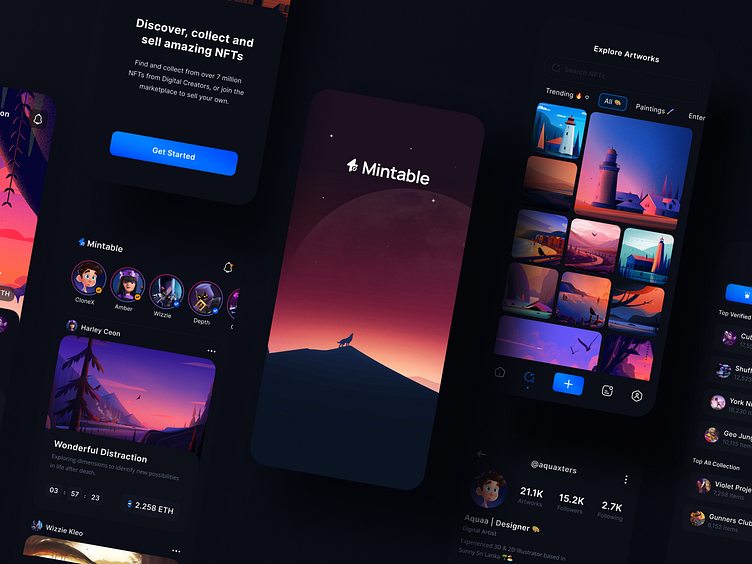
Mintable offers user-friendly minting tools and gasless options that are useful for jewelers who want to create NFTs without asking clients to pay high minting fees. For workshops that offer NFT comissions as part of a commission, Mintable can simplify the process and make a pleasant checkout experience for clients unfamiliar with crypto.
Description
Mintable is an NFT creation and marketplace platform that supports gasless minting and conventional minting on different blockchains. The gasless model lets creators list NFTs that are minted at first sale, which removes an upfront cost barrier. The platform provides templates for metadata, batch minting tools, and easy integration with common wallets. A jeweler can collect a deposit off-chain, create a draft NFT with images and notes, then complete the mint when the client approves final photos or the piece ships. Mintable also supports unlocking content - useful for adding high-res photos or a certificate PDF available to the token holder.
- Gasless options - no upfront network fees for the creator, good for low volume or experimental pieces.
- Simple UI - easy for non-technical clients to claim or buy a token.
- Unlockable content - add private documents like care instructions or authenticity certificates.
- Batch mint tools - useful for small limited editions.
- Good documentation and onboarding guides for creators.
- Smaller marketplace audience compared with the largest platforms.
- Gasless models can place some dependency on the platform for minting execution.
- Limited advanced marketplace features for high-value auctions.
Technical Information and Performance
Mintable's gasless minting usually attaches metadata to an off-chain store and mints on sale through their smart contract. Typical reference metrics: gasless listing creation time under 3 minutes; actual mint-on-sale transaction takes 30 seconds to 4 minutes depending on chain and congestion. Batch minting of 10 pieces on Polygon averages 1-3 minutes per batch to register metadata. Unlockable content retrieval is usually instant once the token is verified to be in a wallet.
User Experience and Real-World Scenarios
A Paris workshop used Mintable to offer a "digital twin" alongside a bespoke bracelet. The client paid a 30 percent deposit in fiat, the workshop took detailed photos and created a draft NFT with unlockable care instructions and a certificate PDF. When the piece shipped, the buyer received a checkout link to pay in crypto or claim the token. The gasless option meant the studio did not carry extra blockchain fees during the commission process.
Maintenance and Care
Keep your draft metadata and original photos organized. Steps to maintain: 1) Create a folder per comission with raw photos and edited images; 2) Pin metadata and images to IPFS and record the CID; 3) Keep a text log of commision milestones and transaction hashes; 4) Update unlockable documents if necessary and keep older versions archived.
Compatibility and User Types
Best for small to mid-sized workshops that want low friction minting and the ability to include private documents with the NFT. Not ideal for sellers needing large auction features or full custody of large primary sales on blue-chip chain marketplaces.
"Gasless minting opens the door for craft makers who want to experiment with NFT provenance without committing to big blockchain fees upfront." - Amir Patel, Web3 Product Lead
Comparison Table
| Feature | Mintable Gasless | Mintable Full Mint |
|---|---|---|
| Upfront Cost | Low | Higher (pay gas) |
| Control | Platform-assisted | Creator-controlled |
| Best Use | Proof of provenance with low fees | Collector grade, single high-value items |
User Testimonial
"Mintable made it easy for us to offer an NFT alongside the physical cuff. The client loved the unlockable instructions and the token felt like a real part of the comission." - Jonas, silversmith.
Troubleshooting
- Problem: Unlockable content not visible. Fix: Confirm wallet ownership on the platform and refresh the content panel, ensure the token is in the correct address.
- Problem: Metadata editing after listing. Fix: Some platforms restrict metadata changes after minting - update the unlockable content instead or create a replacement edition.
- Problem: Buyer confused about gasless flow. Fix: Provide a simple guide and options to pay in fiat via a payment link if they prefer.
Product 3: MetaMask
Why MetaMask Is Included
MetaMask is the most widely used crypto wallet in desktop and mobile browsers and is often the first wallet new collectors install. For bespoke workshops accepting NFT comissions, understanding MetaMask is essential because many clients will use it to pay, receive, or store NFTs. It also integrates with marketplaces like OpenSea and Mintable.
Description
MetaMask is a browser extension and mobile app wallet that manages private keys, signs transactions, and interacts with web-based NFT platforms. It supports Ethereum and various layer-2 networks. For jewelers, MetaMask acts as the bridge between a customer's crypto balance and the marketplace checkout. The wallet shows NFT assets, allows network switching, and can connect to hardware wallets for added security.
- High adoption - many collectors already have MetaMask installed.
- Easy connection to marketplaces - smooth checkout experience for NFTs.
- Network flexibility - supports Ethereum and many layer-2 networks for lower fees.
- Integrates with hardware wallets for safer custody.
- Mobile app available for on-the-go use and signing.
- User error risk - seed phrase handling mistakes are common with new users.
- Phishing danger - fake sites can trick users into signing malicious transactions.
- Not ideal for long-term cold storage without hardware wallet integration.
Technical Information and Performance
MetaMask transaction signing is typically instant from the wallet side, but confirmation time depends on network. Gas estimation accuracy is generally good, but users should be taught to check the gas price slider. For Polygon transactions, confirmations are often under 30 seconds; Ethereum can be 30 seconds to several minutes. MetaMask supports EIP-1559 fee model with baseFee and priorityFee controls.
User Experience and Real-World Scenarios
When a client wants to pay for a bespoke commision with crypto, MetaMask will present a transaction pop-up showing total cost and estimated network fee. Workshops should prepare a clear invoice that includes the expected crypto equivalent and a QR code for mobile MetaMask connections. Offering a short walk-through for clients who are new to wallets can reduce checkout drop-offs.
Maintenance and Care
Advise clients to: 1) Save the seed phrase offline on paper, not in cloud notes; 2) Use strong device passwords; 3) Consider a hardware wallet for larger balances; 4) Regularly update the MetaMask app and extension to the latest version. For the studio, keep a demo wallet to show clients and a written checklist for onboarding.
Compatibility and User Types
MetaMask is best for customers comfortable with browser extensions or who want custody of their keys. For less technical buyers, wallets with custodial flow or fiat checkout options might be simpler. MetaMask is essential knowledge for studios because many collectors prefer non-custodial ownership and the wallet is the standard interface.
"Most early crypto collectors will expect to use a wallet they control - MetaMask is the common baseline and understanding it is part of any modern onboarding workflow." - Diego Alvarez, Crypto Payment Specialist
Comparison Table
| Feature | MetaMask | Hardware Wallet Combo |
|---|---|---|
| Ease of Use | Medium | Lower initially |
| Security | Good with care | Very high |
| Best For | Collectors who self-custody | High-value owners |
User Testimonial
"We guide clients through MetaMask once and they feel empowered to own the NFT themselves. It takes a bit of time, but that personal touch builds trust." - Sofia, custom jeweler.
Troubleshooting
- Problem: Client can't connect wallet. Fix: Check browser extension or mobile deep-link settings, ensure site is added as a trusted site, clear cache.
- Problem: Gas fees appear high. Fix: Suggest switching to a layer-2 network like Polygon when supported by the marketplace or schedule transactions for lower-fee windows.
- Problem: Lost seed phrase. Fix: If seed phrase is lost there is no recovery - stress safe storage and consider custodial alternatives for clients uncomfortable with seed management.
Product 4: Ledger Nano X
Why Ledger Nano X Is Included
For jewelers who handle valuable drops or want to safeguard studio-owned assets, hardware wallets like the Ledger Nano X provide secure cold storage for NFTs and crypto proceeds. Custody is a critical part of turning NFT comissions into a sustainable revenue stream without exposing the studio to custody risk.
Description
The Ledger Nano X is a Bluetooth-enabled hardware wallet that stores private keys offline on a secure element. It signs transactions only after physical confirmation on the device. For a studio that manages a treasury from sales, using a Ledger reduces the risk of hacks, phishing, and browser-based key theft. It supports Ethereum and many EVM tokens, and works with wallets like MetaMask through a secure connection for signing when needed. Ledger Live provides firmware updates and portfolio management.

- Top-tier security - private keys never leave the device.
- Bluetooth and USB connectivity - flexible for desktop and mobile use.
- Supports many chains and tokens - useful for multi-network operations.
- Integrates with MetaMask and other wallets for safe signing.
- Reasonably user-friendly firmware updates and setup for teams.
- Cost - initial purchase price can be significant for a small studio.
- Physical loss risk - must secure the device and seed phrase carefully.
- Bluetooth can add complexity for certain client flows if not setup correctly.
Technical Information and Performance
Ledger Nano X uses a secure element chip with certified firmware. Transaction signing latency is near-instant once a connection is established - typically under 10 seconds for local approval. Battery life supports many signing sessions before recharge. It supports EIP-1559 signing parameters and has a recovery seed format compatible with industry wallets. Firmware updates should be done in a secure environment and only via the official Ledger Live app.
User Experience and Real-World Scenarios
A studio that keeps a reserve fund from NFT sales used a Ledger Nano X to sign transfers when selling inventory to galleries. They set up a multisig workflow where the Ledger is one key in a three-key approval process to add operational safety. For smaller studios, a single Ledger in a studio safe with strict access policies is often sufficient.
Maintenance and Care
Steps to maintain: 1) Record and store recovery seed on paper in two separate secure locations; 2) Update firmware via Ledger Live in a secure network environment; 3) Keep the device physically protected from humidity and extreme temperatures; 4) Test the recovery phrase yearly on a separate test device to ensure it's functional.
Compatibility and User Types
Best for studios that manage significant crypto holdings or run periodic sales and want low custody risk. Not necessary for every small seller, but essential for any business that treats crypto proceeds as a material asset on the balance sheet.
"Hardware custody shifts the risk model. For makers selling high-value pieces or holding long term proceeds, it's a clear step toward responsible treasury management." - Priya Desai, Security Researcher
Comparison Table
| Feature | Ledger Nano X | Software Wallet Only |
|---|---|---|
| Security | Very High | Medium |
| Convenience | Good | Very High |
| Cost | Upfront purchase | Free |
User Testimonial
"Moving our studio treasury to a Ledger reduced my stress. We still have quick access for sales, but the key is offline safety." - Marco, co-owner of a small design studio.
Troubleshooting
- Problem: Device not recognized. Fix: Reboot computer, try USB cable, update Ledger Live, check for blocked drivers on some OS versions.
- Problem: Firmware update failed. Fix: Retry with stable internet and power, avoid interrupting update, contact support if repeated failures occur.
- Problem: Lost device. Fix: Use recovery seed to restore keys on a new Ledger or compatible device, then move funds to a new wallet immediately.
Buying Guide: How to Choose NFT Onboarding Tools for a Workshop
Choosing the right stack for accepting NFT comissions at a bespoke jewelry workshop means balancing simplicity for clients with security for the studio. Consider these criteria and a simple scoring system to compare options.
Selection Criteria and Scoring
Rate each tool 1-5 (1 low, 5 high) on these factors: Ease of Use, Transaction Cost, Security, Integration, Support/Documentation. Sum the scores to compare options. For example: OpenSea scores high on Ease of Use (4) and Integration (5), but medium on Transaction Cost (3).
Budget Considerations and Value Analysis
Price ranges: Marketplace listing is usually free to low cost with percentage fees on sale; gas fees depend on network choice - Polygon is typically cents to few dollars vs Ethereum that can be
Maintenance and Longevity Projections
Expect ongoing costs: marketplace fees of 1-5 percent per sale, potential pinning service fees for IPFS, and periodic hardware wallet replacements on a 4-6 year cycle. Project ROI by estimating added sales from collector premiums and royalty income. Example: If a workshop sells 20 items a year with an average premium of $200 per item via NFT provenance, the additional $4,000 may cover the initial tooling cost in under a year.
Compatibility and Use Cases
For simple commissions: use Mintable gasless minting + MetaMask for collectors. For high-value pieces: use OpenSea with Ledger custody for studio funds and consider a multisig treasury. If you expect lots of low-value sales, prioritize low-fee layer-2 networks.
Expert Recommendations and Best Practices
1) Use IPFS pinning for images and certificates to reduce broken links. 2) Offer both crypto and fiat checkout to broaden appeal. 3) Train staff on wallet basics to support clients. 4) Keep clear shipping and returns policy tied to NFT ownership. These practices reduce friction and protect the studio.
Comparison Matrices for Decision Factors
| Factor | Best For | Recommended Tool |
|---|---|---|
| Low upfront cost | Small batches | Mintable gasless |
| High security | High-value sales | Ledger + OpenSea |
| Client friendliness | New collectors | OpenSea + MetaMask walkthrough |
Seasonal and Timing Considerations
Plan drops around gifting seasons and craft fairs - holiday season and graduation dates often drive collector interest. Monitor network congestion; avoid major NFT minting events that spike gas fees. If possible batch mints on low-fee days and announce dates in advance.
Warranty and Support
For hardware wallets, purchase from official vendors and register serial numbers where available. For marketplace issues, maintain case notes and transaction hashes to help support. Keep a simple SLA for customer queries about provenance and shipping so collectors know what to expect.
FAQ
What is the simplest way for a workshop to accept an NFT comission?
The simplest path is to combine a gasless minting service with an easy payment flow. Take a deposit in fiat or crypto, create a draft NFT with images and unlockable care instructions, and complete the mint on sale or at delivery. Offer a clear guide for clients who are new to wallets and provide a fiat payment fallback if needed.
How do I link a physical piece to an NFT so provenance is reliable?
Use permanent content storage like IPFS for high-res photos and certificates, include serial numbers or unique markers in the metadata, and keep an internal log of the production stages with timestamps. Consider engraving a hidden serial number or using a tamper-evident tag that appears in photos and on the certificate.
How much does it cost to mint an NFT for a comission?
Costs vary: on Ethereum mainnet minting can cost between
Do I need a hardware wallet for my studio?
Not always, but for holding significant sums from sales it's a good idea. Hardware wallets reduce the risk of key theft and are recommended if you plan to keep crypto proceeds as part of your business treasury. For small volumes, strong software wallet practices may suffice, but hardware custody is best practice for higher values.
How do royalties work for secondary sales of a jewelry NFT?
Royalties are set by the creator when minting on many marketplaces and typically range 5-10 percent. They are enforced by marketplace contracts for on-platform sales, but not all marketplaces honor royalties. Consider setting clear licensing terms in the metadata to strengthen claims and choose marketplaces known to support royalties.
What if a buyer wants to pay in fiat, not crypto?
Offer a fiat checkout and mint the NFT on behalf of the buyer once payment clears. You can use a third-party service or do manual minting. Communicate clearly about timing and include the transaction hash in the buyer receipt once the mint is complete.
How do I handle shipping and returns when an item is linked to an NFT?
Include shipping and returns policy in the NFT metadata or unlockable documents. Clarify that token transfer proves ownership but physical returns follow the studio's return policy. If a buyer transfers the NFT before receiving the piece, set up escrow or require transfer only after physical delivery confirmation.
Can I change the metadata after I mint an NFT?
It depends on the platform and how metadata was stored. On-chain metadata is immutable; off-chain metadata can be updated but risks breaking provenance if links change. Best practice is to pin original metadata to IPFS and use unlockable content for later updates or add a versioned provenance log to the token's history.
Conclusion
Bringing "Crypto in Real Life" into a bespoke jewelry workshop is less about chasing trends and more about building reliable, customer-focused workflows that respect the craft. NFT comissions can add provenance, storytelling, and new revenue streams, but they require clear onboarding, careful custody, and plain-language communication with clients.
Start small with gasless minting or low-fee networks to learn the process without large upfront costs. Use hardware custody for studio funds once you handle meaningful balances, and always back up metadata on resilient storage like IPFS. Train staff to walk clients through wallet basics and have fiat fallback options to keep sales accessible.
My final recommendation as someone who studies market cycles and behavioral shifts is pragmatic optimism - the technology is ready enough for real world use, but the real advantage comes from thoughtful service design. Keep records, protect keys, and treat the NFT as part of the product experience, not an add-on afterthought.
For further research, watch how marketplaces adopt royalty standards and how layer-2 solutions evolve - both will change cost dynamics and collector expectations. With modest investment in tools and training, most workshops can add NFT comissioning to their offerings and make "Crypto in Real Life" a sustainable part of their business.