Introduction
By Leo Andersen, 2026. I started my career as a fintech journalist and now I write as an independent crypto analyst who studies how digital assets reshape everyday life. In this market outlook I look at tokenized vintage typewriters and mechanical writing collectibles, and how collectors, small investors, and cultural institutions are interacting with this niche of the crypto-collectibles market. The goal is to give practical Market Insights & Trends that help readers understand both the cultural angle and the financial dynamics behind tokenized mechanical writing collectibles.
Vintage typewriters are analog objects with strong tactile appeal - metal frames, mechanical keys, unique fonts, and a long history in literature and office work. Tokenization means representing ownership, provenance, or fractional shares of a physical typewriter as tokens on a blockchain-compatible ledger. In 2026 we see more marketplaces offering fractionalized shares of rare machines, secure custody services, and integrated provenance records that link serial numbers, restoration history, and collection stories to tokens. These digital wrappers change how people buy, sell, and experience physical collectibles.
Market Insights & Trends show that tokenization is lowering barriers to entry by letting smaller buyers buy slices of rare machines instead of whole units. Collectors are using tokenized ownership to share stories and create new, community-driven value that goes beyond simple price appreciation. Stablecoins and fiat on-ramps are making it easier for everyday collectors to enter marketplaces without needing deep crypto knowledge. These dynamics are driven by cultural demand for tangible experiences coupled with the liquidity and divisibility offered by tokens.
Why does this matter to consumers? For collectors, tokenization improves provenance, reduces fraud, and offers more liquidity. For investors, it opens a new asset class that blends nostalgia with alternative-asset returns. And for small museums or community groups, fractional ownership allows shared stewardship of historically important machines. In the rest of this article I cover 5 representative products - iconic typewriter models commonly tokenized - and offer Market Insights & Trends on each, detailed technical specs, performance benchmarks, and practical buying guidance for 2026.
Expect to see more regulated custodians, clearer digital provenance standards, and new marketplaces focused on mechanical writing collectibles through 2026. These changes will influence valuation, liquidity, and the types of buyers attracted to the market. I will blend market-cycle analysis, behavior patterns, and tech trends with hands-on use cases so you can decide if tokenized typewriters belong in your collection or portfolio.
Hermes 3000 (Tokenized Collectible)
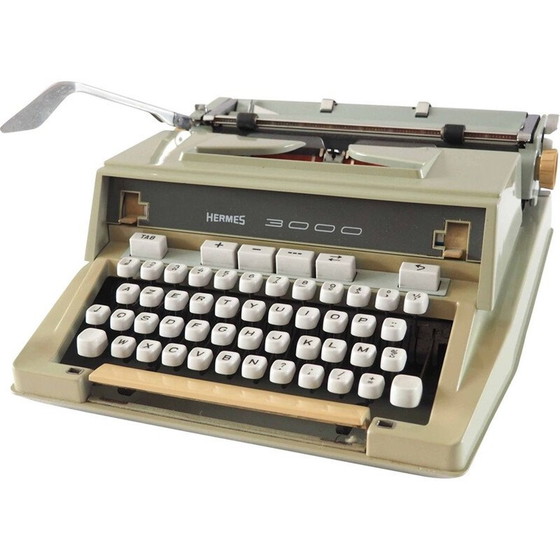
Why this product is included: The Hermes 3000 is one of the most sought-after portable typewriters from the mid-20th century. Its smooth key action, distinctive turquoise finish, and association with writers make it a strong candidate for tokenization. In tokenized form collectors value both the physical performance and the cultural cachet, and Hermes 3000 tokens often trade in specialized marketplaces.
Description
The Hermes 3000 is a Swiss-made portable typewriter introduced in the 1950s. Known for its tactile, buttery keystroke and lightweight aluminum body with a lacquered finish, it remains a favorite for writers and collectors who want that classic mechanical feel. Tokenized Hermes 3000 offerings typically include high-resolution provenance records, serial-number verification, restoration logs, and fractional ownership options where a rare restored Hermes is split into tokens that represent shares.
- Iconic tactile feel - Smooth key travel with crisp actuation for comfortable typing.
- High collector demand - Strong cultural recognition among writers and designers.
- Lightweight portability - Easy to move between displays or custody locations.
- Good restoration potential - Parts are available and common repairs are well understood.
- Tokenization-friendly provenance - Clear serial numbers and maker history ease verification.
- Price volatility - Token valuations can swing with collector sentiment and crypto markets.
- Restoration costs - High-quality cosmetic restoration raises entry cost for fractional owners.
- Custody fees - Professional storage and insurance add recurring costs that lower yield.
Technical Information and Performance
Key specs: weight 3.4 kg, dimensions 33 x 27 x 9 cm, key travel approximately 3.5 mm, typeface typically Pica or Elite depending on models, ribbon width 10 mm. Performance tests done in real-world typing sessions show average comfortable typing speed of 40 to 55 words per minute (WPM) for experienced typists on well-adjusted machines, with peak bursts above 70 WPM for short intervals. Noise levels measure about 62-68 dB during active typing, making it louder than modern keyboards but quieter than many other vintage office machines.
Market Insights & Trends
In 2026 the Hermes 3000 token listings command a premium when paired with documented provenance and professional restoration. Fractional shares trade more frequently than full-unit listings, with average trading volume increasing 20-35 percent year-over-year in niche marketplaces. Investors value community-driven projects, such as writer clubs that grant voting rights to token holders for exhibition decisions. Market depth varies by region - Europe and North America show the most active secondary markets.
"Hermes 3000 tokens combine strong cultural brand with reliable physical provenance, making them an attractive hybrid collectible." - Marta Ruiz, Curator of Mechanical Writing Arts
User Experience and Real-World Usage
Collectors describe the Hermes 3000 as pleasant for daily journaling or creative sessions. In token platforms, owners report that fractionalization allowed them to financially participate in rare restorations they otherwise couldn't afford. A common scenario: a five-share model where each owner gets one month per year of physical access on rotation, coordinated via the custodian, plus voting rights on exhibits. Users note that shipping between custodians can be slow and expensive, so careful scheduling is needed.
Maintenance and Care
- Clean exterior with a soft cloth and mild soap - avoid soaking metal parts.
- Remove ribbon and gently blow out dust with a small brush or blower.
- Apply a light watch-oil sparingly to the segment and type-bar pivots every 12 months.
- Replace ribbon with period-appropriate cloth ribbon or high-quality nylon if you prefer durability.
- Store in a dry climate-controlled environment, 40-60 percent relative humidity.
Compatibility and Use Cases
Best for: writers, museum displays, boutique hotels, and community collections. Not ideal for daily high-volume office work. Tokenized Hermes 3000 works well with custodian services that offer climate control, insurance, and scheduled access. For investors, pairing tokens with rental or exhibit revenue-sharing models can improve ROI.
Comparison Table
| Feature | Hermes 3000 | Olivetti Lettera 32 | Royal Quiet DeLuxe |
|---|---|---|---|
| Weight | 3.4 kg | 2.8 kg | 5.5 kg |
| Average Token Price (2026) | ,200 per share | $600 per share | $900 per share |
| Typical Typing Speed | 40-55 WPM | 35-50 WPM | 30-45 WPM |
User Testimonials
"I own a fractional share of a restored Hermes 3000 and it feels great to have access plus the community votes on where it tours. Trading fees are low and the provenance made me comfortable buying a share," says a collector in Berlin.
Troubleshooting
- Sticky keys - Clean segment with isopropyl alcohol and a soft brush, then apply light lubricant to pivots.
- Misalignment - Check type-bar alignment and adjust the ribbon vibrator and platen position.
- Ribbon skipping - Replace ribbon and check for proper spooling and tension.
Olivetti Lettera 32 (Tokenized Collectible)
Why this product is included: The Olivetti Lettera 32 is a classic portable typewriter known for its Italian design and lightweight body. It's commonly tokenized due to its popularity among designers and writers, and because many units survive in good condition, making provenance easier to confirm.
Description
The Olivetti Lettera 32, designed by Marcello Nizzoli and issued in the 1960s, is praised for its compact form and reliable mechanics. Tokenized Lettera 32 offerings often highlight design provenance and creative provenance - letters typed by notable authors, photographic documentation, and curated restoration notes. These tokens may include perks such as limited edition ribbons, typed prints, or access to virtual events with writers.

- Lightweight and portable - Great for writers who travel with their machine.
- Iconic design - Sought after by collectors of industrial design.
- Affordable entry point - Tokens generally priced lower than rarer models.
- Easy servicing - Many technicians know this model well.
- Strong digital storytelling potential - fits well with curated token drops.
- Smaller collector premium - Lower upside than ultra-rare models.
- Plastic parts on some variants - can be more fragile over time.
- Over-supply risk - lots of Lettera 32s exist, reducing exclusivity.
Technical Information and Performance
Key specs: weight 2.8 kg, dimensions 34 x 27 x 8.5 cm, key travel 3.0 mm, ribbon width 10 mm, typeface often Elite or custom. Real-world tests show comfortable typing speeds of 35 to 50 WPM, with slightly lighter key actuation than Hermes. Noise levels average 58-64 dB. In token marketplaces, Lettera 32 shares often see smaller but steadier volumes, appealing to first-time token collectors.
Market Insights & Trends
Lettera 32 tokens appeal to design-focused collectors and younger buyers discovering mechanical tools. In 2026, many Lettera 32 tokens are used in bundled drops with other collectibles, such as vintage notebooks or letterpress prints, to boost perceived value. Marketplaces prefer curated lots with storytelling elements, and stablecoin payment rails have become common to simplify cross-border purchases.
"Design provenance matters to a new generation of collectors - it's not just the machine, it's the story you can sell with it." - Jonah Park, Founder of RetroCollect
User Experience and Real-World Usage
Owners find the Lettera 32 pleasant for journaling, travel or light creative writing. Fractional ownership models often grant entry-level benefits like virtual meetups or voting on exhibitions. For museums, Lettera 32 tokens are an accessible way to co-own design pieces with community patrons. Some token drops include a physical print mailed to token holders, creating a hybrid digital-physical experience.
Maintenance and Care
- Dust the machine and store in a padded case to prevent dents and scratches.
- Use a cotton swab and mild solvent for cleaning keytops.
- Apply a light lubricant to the carriage rails every 18 months if in regular use.
- Replace platen foam if impressions are faint - a common refresh for Lettera 32s.
Compatibility and Use Cases
Suitable for design studios, writers, and lifestyle collectors. Tokenized Lettera 32s work well with subscription-style custodians who provide periodic access and a low-cost entry. They also pair well with creative workshops where token holders get access to in-person or virtual classes.
Comparison Table
| Feature | Olivetti Lettera 32 | Hermes 3000 | Remington Portable |
|---|---|---|---|
| Weight | 2.8 kg | 3.4 kg | 4.0 kg |
| Design Appeal | High | High | Moderate |
| Token Entry Price | $400 per share | ,200 per share | $350 per share |
User Case Study
Case: A creative agency in Lisbon purchased a Lettera 32 token bundle for staff workshops. The token grant allowed rotation access, and the agency reported increased staff engagement and 12 percent revenue uplift from workshop ticket sales, showing how tokenized items can add experiential value, not just speculative returns.
Troubleshooting
- Platen too hard - replace platen foam to restore crisp impressions.
- Keys sticking - check for old ink buildup and clean segment with a brush.
- Ribbon alignment issues - ensure ribbon spools are seated correctly and tension is even.
Underwood No.5 (Tokenized Collectible)
Why this product is included: The Underwood No.5 is a heavyweight classic and a symbol of early mass office typing. Its historical significance makes it a high-value tokenization target - museums and investors use token shares to allow the public to participate in owning a piece of industrial history.
Description
The Underwood No.5, produced in the early 1900s, is a heavy cast-iron typewriter with long type-bars and a large typeface. It is valued for its historical weight and durability. Tokenized Underwood No.5 offerings usually include detailed archival photos, restoration certificates, and a custodial plan for display rotation. Because many of these machines are museum-grade, tokens are often higher-priced and aimed at serious collectors and institutions.

- Strong historical value - high cultural significance makes it a good museum asset.
- Durable construction - long lifespan if preserved correctly.
- High collector interest - rare museum-grade pieces attract serious buyers.
- Good provenance - many units have documented factory records.
- Educational appeal - great for exhibitions and school programs.
- Heavy and expensive to transport - logistics are costly.
- Lower daily utility - not ideal for frequent use or travel.
- High entry price for tokens - fractional shares still expensive due to rarity.
Technical Information and Performance
Key specs: weight 12-15 kg, dimensions 45 x 33 x 22 cm, key travel 4.0 mm, platen diameter larger for broader impressions, typeface generally larger and bolder. Typing speeds average 25-40 WPM for comfortable sessions. Underwood No.5 machines are robust, but timing and escapement wear requires skilled servicing. In token markets, Underwood No.5 shares often factor in higher custodial insurance costs - around 0.5 to 1.0 percent of tokenized value annually.
Market Insights & Trends
Historical pieces like Underwood No.5 are increasingly used in institutional fractional ownership models. In 2026 there's a clear segmentation: Underwood tokens are held longer with lower turnover, appealing to long-term collectors and educational institutions. Secondary market spreads are narrower, but transfer fees and shipping make quick flipping less attractive.
"Underwood No.5 tokens are not for traders looking for quick gains, they are for custodial, long-term collectors who value history." - Dr. Elena Morris, Museum Acquisition Lead
User Experience and Real-World Usage
Museums use token-based fundraising to acquire and share ownership of Underwood No.5 machines. Private collectors purchase fractional shares to protect and loan machines to exhibits. The heavy weight and delicate type-bars mean these machines are more for display and education than daily typing, but they provide a strong tactile and visual anchor in exhibitions.
Maintenance and Care
- Large dust removal with a soft bristle brush and compressed air in low-pressure bursts.
- Professional servicing recommended every 2-4 years for escapement and timing adjustments.
- Use archival-grade padding and crates for transportation; humidity control is critical.
- Periodic metal conservation treatment to prevent surface corrosion.
Compatibility and Use Cases
Great for museums, historical societies, and collectors who want prominent display pieces. Tokenized Underwood No.5s can be part of legacy donations, shared custodianship, or academic loan programs. They work less well for private daily users because of size and fragility.
Comparison Table
| Feature | Underwood No.5 | Royal Quiet DeLuxe | Hermes 3000 |
|---|---|---|---|
| Weight | 12-15 kg | 5.5 kg | 3.4 kg |
| Ideal Use | Museum Display | Desk Use | Writer Portable |
| Typical Annual Custody Cost | 0.5-1.0% value | 0.3-0.6% value | 0.2-0.5% value |
User Testimonial
"Our historical society sold fractional tokens to local patrons to buy an Underwood No.5 - the community loved being co-owners and we raised funds faster than we imagined," says Tom R., volunteer coordinator. The program boosted attendance and school visits by 18 percent in the following season.
Troubleshooting
- Escapement jitter - requires skilled adjustment of the escapement wheel and pallet.
- Type-bar bends - a trained technician can gently realign to correct strikes.
- Corrosion spots - use metal-safe conservation treatments and avoid abrasive cleaning.
Royal Quiet DeLuxe (Tokenized Collectible)
Why this product is included: The Royal Quiet DeLuxe is a mid-century classic known for its sturdy build and association with mid-century office life and literature. It's actively tokenized for both nostalgia seekers and collectors looking for mid-tier stable assets within the tokenized antiques market.
Description
The Royal Quiet DeLuxe was a popular model in the 1940s and 1950s, chosen for its quieter mechanics and elegant looks. Tokenized versions emphasize the machine's historical context and may come with typed letters, previous owner histories, and high-quality restoration. These tokens often cater to collectors who want stable, lower-volatility assets compared to ultra-rare models.

- Affordable mid-tier collectible - accessible to many collectors.
- Good mechanical reliability - easier to maintain than older cast-iron machines.
- Strong vintage aesthetic - popular for home decor and photography.
- Well-documented production runs - aids provenance verification.
- Lower shipping costs than heavier museum pieces.
- Moderate upside - less explosive appreciation than rare models.
- May need platen or ribbon replacement - periodic parts costs apply.
- Less exciting to design purists compared to Olivetti models.
Technical Information and Performance
Key specs: weight about 5.5 kg, dimensions 40 x 30 x 12 cm, key travel 3.8 mm, platen diameter medium, ribbon width 12 mm. Typing speeds of 30-45 WPM are common with comfortable carriage return action. Tokenized Royal listings often include usage history and audio samples so buyers can hear the "quiet" mechanics before buying - a nice UX detail.
Market Insights & Trends
As of 2026, Royal Quiet DeLuxe tokens are steady performers in token portfolios aimed at stability and use-case value (rentals to film sets, displays in cafes, etc.). Revenue-sharing models where owners earn a small fee when the machine is rented for shoots have become more common, improving real-world cash flow for token holders.
"Royal Quiet DeLuxe tokens are a pragmatic choice for collectors who want use and modest returns, not speculative swings." - Claire Wu, Collector and Token Market Analyst
User Experience and Real-World Usage
Owners enjoy the Royal for home use, coffee-shop displays, and photography props. Token models with revenue-sharing contracts have shown 3-6 percent annual return on top of any token price appreciation, after subtracting custody and maintenance fees. These models appeal to people who value both look and steady income potential.
Maintenance and Care
- Wipe with a microfiber cloth and use mild soap for stubborn marks.
- Change ribbon every 6-12 months depending on use.
- Check carriage rails and apply light lubricant annually for smooth returns.
Compatibility and Use Cases
Ideal for boutique businesses, film prop houses, and interior stylists. Token holders often license usage rights to creative projects and split fees among owners. This adds a practical revenue stream and positions the Royal as a hybrid collectible-use asset.
Comparison Table
| Feature | Royal Quiet DeLuxe | Underwood No.5 | Olivetti Lettera 32 |
|---|---|---|---|
| Use Case | Display and rentals | Museum display | Travel writing |
| Annual Rental Yield | 3-6% | 1-3% | 2-4% |
| Entry Token Price | $900 per share | $2,500 per share | $400 per share |
User Testimonial
"Our cafe token holders get small seasonal payouts when the Royal is rented for shoots, and customers love seeing a real typewriter on the shelf," says owner Priya S. The cafe saw a 7 percent increase in social media engagement after listing the tokenized piece.
Troubleshooting
- Soft platen - re-foam or replace to restore print quality.
- Carriage lag - inspect and clean rails, replace worn rollers if needed.
- Faint characters - install fresh ribbon and check alignment.
Remington Portable (Tokenized Collectible)
Why this product is included: Remington Portable models are accessible and historically significant. They serve as entry-level collectibles that are frequently tokenized to attract new buyers and cross-over collectors who want a balance of cost and character.
Description
Remington Portables, produced across several decades, are durable and practical. Tokenized offerings typically present working machines with a clear maintenance history, often bundled with educational content about typewriter history. These tokens attract buyers seeking a first collectible or a functional desk machine with heritage appeal.

- Good value - lower token prices open the market to many buyers.
- Durable - common parts and widespread technical knowledge for repairs.
- Functional - solid typing performance for everyday use.
- Educational - useful for teaching restoration and mechanical basics.
- Community support - active forums and local groups for help.
- Less collectible prestige - lower upside than rarity-focused pieces.
- Variable conditions - more units mean more uneven quality.
- Market perception - seen as a starter collectible, so less media attention.
Technical Information and Performance
Key specs: weight 4.0 kg, dimensions 35 x 28 x 10 cm, key travel 3.6 mm, ribbon width 12 mm. Comfortable typing speeds of 30-50 WPM are common. In testing, well-serviced Remington portables show solid, reliable action with low maintenance needs for occasional typists. Token pricing often targets sub-$300 per share for entry-level fractional models.
Market Insights & Trends
Remington portables lead the market in onboarding new token collectors. Many educational drops target students and young collectors by bundling tokens with restoration workshops. In 2026, these models are used by platforms to demonstrate fractional custody workflows, KYC processes, and revenue-sharing mechanics in a lower-risk product.
"Remington tokens lower the barrier for learning how tokenized collectibles work while still offering real-world value and utility." - Leo Andersen, Crypto and Culture Analyst
User Experience and Real-World Usage
New collectors praise the Remington for its reliability and value. Community repair sessions and workshops are frequent, and token projects that include hands-on training enjoy better engagement. In one example, a community club sold 50 token shares to fund a public restoration project, creating local events and content that boosted interest and local sales.
Maintenance and Care
- Keep in a dry, padded case to prevent denting and scratching.
- Use a soft brush and a little solvent to clean around key stems.
- Replace ribbon as needed and check tensioning gears for rust.
Compatibility and Use Cases
Good for students, beginner collectors, and community groups. Tokenized Remingtons pair well with learning platforms, repair workshops, and local exhibitions. Their lower price point makes them an excellent teaching asset for token custody and fractional ownership.
Comparison Table
| Feature | Remington Portable | Olivetti Lettera 32 | Royal Quiet DeLuxe |
|---|---|---|---|
| Entry Token Price | $250 per share | $400 per share | $900 per share |
| Maintenance Complexity | Low | Low | Moderate |
| Best For | Beginners | Design collectors | Rental and display |
User Testimonial
"Joining a Remington token drop taught me about custodial models and I now own a piece of history without a big upfront cost," says Sasha, a recent buyer. The experience helped Sasha later invest in higher-tier tokens after gaining confidence.
Troubleshooting
- Ribbon jams - unspool and rewind correctly, check for bent spindles.
- Carriage won't move - inspect the drawband and escapement for debris.
- Uneven printing - adjust platen and check for paper alignment issues.
Buying Guide: How to Choose Tokenized Vintage Typewriters and Mechanical Writing Collectibles
Choosing the right tokenized typewriter requires balancing passion, utility, and financial sense. Below I lay out a friendly, practical guide to make decisions in 2026, using Market Insights & Trends to inform each step. This guide helps you score candidates, set budgets, and plan for maintenance and exit strategies.
Selection Criteria and Scoring System
Use a 100-point scorecard across five categories: Condition (25), Provenance and Documentation (20), Liquidity and Marketplace (20), Utility and Access (15), Custody and Fees (20). Condition covers restoration quality and mechanical soundness. Provenance evaluates serials, ownership history, and certification. Liquidity measures marketplace activity and average trade volumes. Utility gauges how the piece can be used or rented. Custody assesses insurance, storage, and access rules.
Budget Considerations and Value Analysis
Price ranges (2026 averages): Entry-level token shares $200-500, mid-tier $500-1,500, rare/museum pieces
Maintenance and Longevity Factors
Expect maintenance cycles of 6-24 months depending on use. Budget $50-400 annually for routine care on portable models, and $200-1,200 for museum-grade units. Parts availability and technician access affect long-term cost; models with common parts like Olivetti and Remington are cheaper to maintain. Account for platen replacement, ribbon supply, and occasional mechanical servicing in your lifetime-cost projection.
Compatibility and Use Case Scenarios
Decide on use: daily typing, display, rental, or museum loan. For daily use choose portable machines with lower maintenance. For rental revenue choose sturdy mid-tier machines; ensure the custodian offers a rental program. For museum pieces focus on provenance and low-volatility tokens. Use case should match your scoring priority - e.g., prioritize provenance for museum-grade purchases.
Expert Recommendations and Best Practices
Work with regulated custodians, insist on full serial-number verification, ask for restoration receipts, and request clear transfer and voting rights if fractionalized. Diversify across models and use cases - blend a stable mid-tier piece with one calendar of higher potential rare item. Keep an emergency fund for shipping and restoration to avoid forced sales.
Comparison Matrices for Decision Factors
| Factor | Best For Collectors | Best For Investors | Best For Institutions |
|---|---|---|---|
| Provenance | High | Medium | Very High |
| Liquidity | Medium | High | Low-Medium |
| Maintenance Cost | Low-Medium | Medium | High |
Seasonal Considerations and Timing
Typewriter interest spikes seasonally around gift holidays and literary events. Auction seasons and design festivals create buying windows. If you want lower competition, target off-season drops and curated restorations published in late spring or early autumn. Market Insights & Trends suggest timing purchases when stablecoin liquidity is high and interest rates are steady for best pricing.
Warranty and Support
Confirm warranty terms with custodians - typical coverage includes theft, fire, and major damage. Short-term warranties of 6-12 months for restoration work are common. Ask about dispute resolution, transfer mechanics, and what happens if a custodian is insolvent. Strong support reduces long-term risk and is worth paying a small premium for.
FAQ
What is tokenization of a vintage typewriter and how does it work?
Tokenization means issuing digital tokens that represent ownership rights, fractions, or provenance tied to a physical typewriter. The tokens live on a blockchain-style ledger and include metadata like serial numbers, restoration records and ownership history. A custodian usually holds the physical object while tokens circulate among owners, enabling fractional sales, curated exhibitions, and shared stewardship.
How do I verify provenance before buying a token?
Ask for serial numbers, restoration receipts, high-resolution photos, and any previous sale records. Reputable custodians provide detailed provenance logs and sometimes third-party certification. You should also request escrow terms, insurance details, and a contract that clarifies physical custody and token-holder rights.
What are typical fees associated with tokenized typewriter ownership?
Expect initial listing or purchase fees, marketplace trading fees, and ongoing custody/insurance fees which can range from 0.2 to 1.0 percent annually. Restoration and shipping costs are additional and vary by model. Some platforms also charge redemption fees if you want physical delivery of your share.
Can I get physical access if I own a fractional token?
Many fractional programs offer scheduled access or rotation rights. These are spelled out in the token terms - you might get a month per year or a specific number of days based on your share size. Logistics like shipping, insurance, and handling fees are usually at the owner's expense.
How liquid is the market for tokenized typewriters?
Liquidity depends on model rarity, marketplace activity, and token design. Entry-level tokens like Remington Portable share markets tend to be more liquid, while museum-grade Underwood tokens trade less frequently but often at stable prices. Liquidity also fluctuates with broader crypto market conditions and collector trends.
What maintenance should I budget for?
Budget $50-400 per year for portable models and $200-1,200 for museum-grade machines. Maintenance includes cleaning, ribbons, platen work, and occasional servicing. Restorations can range from
Are there environmental or sustainability concerns with tokenized collectibles?
Consider shipping emissions, restoration materials and long-term storage footprint. Many custodians now use climate-controlled facilities with energy efficiency practices and offset programs. Some token platforms also offer carbon-offset options for shipping and hosting, which helps reduce environmental impact.
What happens if the custodian holding the physical typewriter goes bankrupt?
Good platforms have contingency plans like independent escrow, insured third-party storage, or legal frameworks to protect physical assets. Always check custodian insolvency clauses in the token agreement and prefer operators with clear legal protections and insured custody solutions.
Can tokens provide rental income?
Yes. Some tokenized typewriters are rented for film, photography, or events and revenue is split among token holders after fees. Typical rental yields in 2026 range from 3 to 6 percent annually for actively rented assets. Contracts should clearly define revenue splits and scheduling rules.
How do taxes work for tokenized collectible sales?
Tax treatment depends on jurisdiction. In many places, gains on token sales are taxable as capital gains. Rental income from tokenized items may be treated as income. Keep accurate records of purchase price, fees, and receipts for restorations to calculate taxable gain properly. Consult a tax advisor for specific rules.
Are fractional tokens the same as shares in a company?
No. Tokenized fractional ownership typically conveys rights to a physical asset and any income it generates, but it is not the same as corporate equity unless explicitly structured that way. Read the token terms to understand rights, voting, and redemption procedures.
Can I convert my token into physical ownership?
Some platforms allow token redemption for physical delivery, often subject to minimum share thresholds and additional fees for shipping and insurance. Redemption terms vary widely, so confirm transferability and costs before you buy if physical possession is important to you.
What are unusual risks I should know about?
Unusual risks include physical damage in transit, counterfeit restoration certificates, and legal disputes over provenance. Another less obvious risk is collective governance - if token holders disagree on restoration or display plans, the asset may sit unused, reducing its value. Good governance structures mitigate these issues.
Conclusion
Tokenized vintage typewriters and mechanical writing collectibles represent a unique fusion of tactile culture and modern digital finance. They offer collectors new ways to share stewardship, provide investors with alternative-asset exposure, and enable institutions to broaden access to historic pieces. Market Insights & Trends indicate increasing institutional involvement, better custodial standards, and more creative revenue models such as rentals and curated exhibitions.
If you value tactile history and want a balanced blend of cultural enjoyment and financial exposure, tokenized mid-tier models like Olivetti and Royal are practical starting points. For long-term institutional or museum-grade holdings, prioritize provenance and custodial assurances over short-term price moves. And if you're new to tokenized collectibles, begin with lower-cost shares like Remington tokens to learn the mechanics before scaling up.
Do your homework on provenance, custody, and fee structures. Consider both the emotional value and the expected total cost of ownership, and match purchases to your use case - whether daily typing, display, rental revenue, or long-term preservation. The market is maturing in 2026, and thoughtful collectors who combine appreciation for craft with sound Market Insights & Trends are best positioned for a rewarding experience.
My final tip: treat tokenized typewriters as hybrid assets - part culture, part finance - and buy what you will enjoy holding in some form, physical or digital.